
The Starling Paradox
From 60 birds released in Central Park to millions swarming the Northeast. Explore the history, biology, and controversy of Sturnus vulgaris.
The Shakespearean Mistake
In 1890, Eugene Schieffelin released 60 European Starlings into New York City's Central Park. Many historians say his goal was to introduce every bird mentioned in Shakespeare's works to North America.
"Nay, I'll have a starling shall be taught to speak nothing but 'Mortimer'..."
— Henry IV, Part 1, William Shakespeare
Population Explosion (Millions)
Identification Guide
Distinguishing Sturnus vulgaris by season and age.
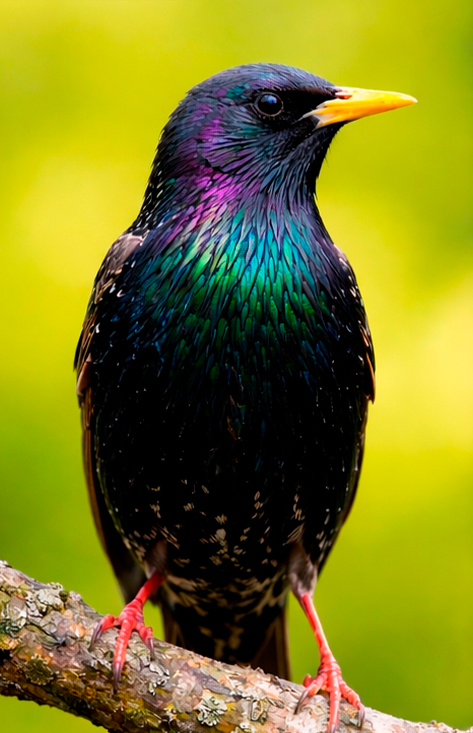
Summer Adult
Yellow Beak
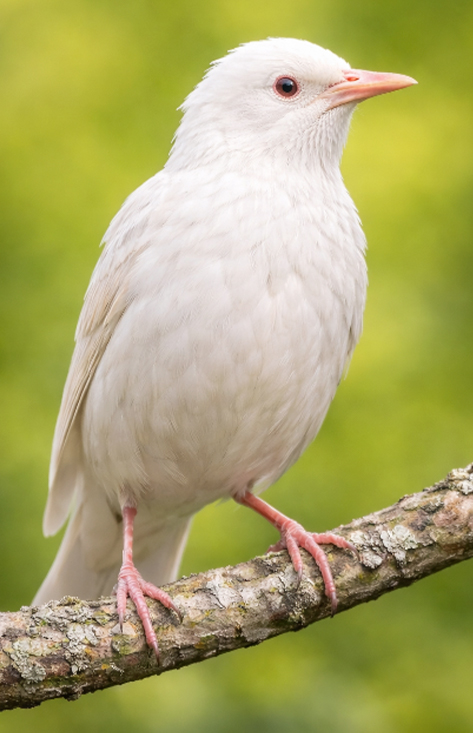
Glossy black with iridescent sheen. Tap the photo to see the rare ALBINO form.
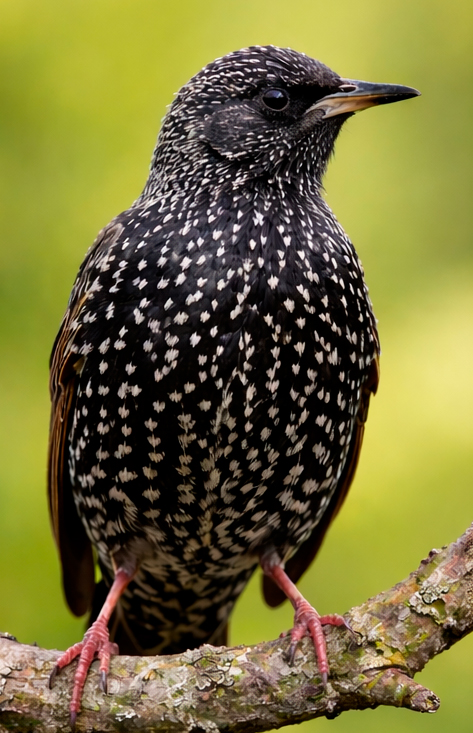
Winter Adult
Dark Beak
The "stars" appear! Feathers have bold white tips. The beak darkens to black/brown.
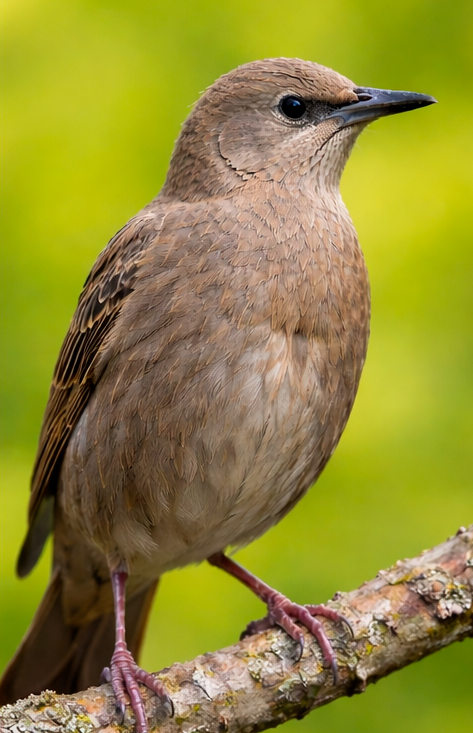
Juvenile
Gray/Brown
Uniformly drab brown-gray. Often confused with female cowbirds or blackbirds before their first molt.
Field Research Module
THE STARLING
Sturnus vulgaris
🧬 ID & Profile
| Summer Look | Glossy, Yellow Beak |
|---|---|
| Winter Look | White Speckles, Dark Beak |
| Wing Shape | Short, pointed, triangular |
| Population | Over 200 Million (NA) |
| Lifespan | 2–3 Years (Wild) |
🪲 Ecosystem: The Good & The Bad
The Good: Starlings are vital for pest control, consuming thousands of harmful Japanese Beetle Larvae (grubs) per acre.
The Bad: They are aggressive "cavity nesters" that steal nesting holes, often displacing native birds like the Eastern Bluebird.
The Science of "Moby"
Why are some starlings white? It comes down to a protein called Melanin.
-
1
Normal Starling: Cells produce melanin, creating black/iridescent feathers to absorb heat and strengthen wings.
-
2
Leucism (Genetic Mutation): A defect prevents melanin from reaching the feathers. The bird is white but still has dark eyes.
-
3
Albinism (Recessive Trait): A complete absence of melanin enzyme (Tyrosinase). The bird has white feathers and pink eyes (blood vessels showing through).
Fluid Dynamics of a Murmuration
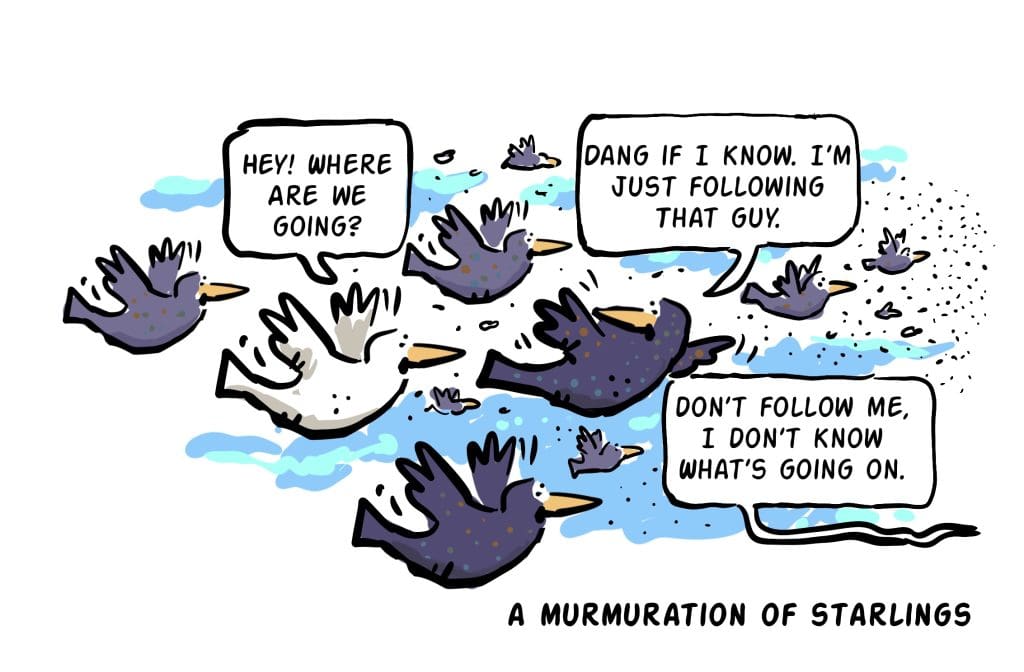
A flock of starlings (murmuration) behaves like a superfluid, forming a massive, shape-shifting flock. It's not led by a single bird. Instead, it relies on "Scale-Free Correlation."
The Rule of Seven
Physics research shows each starling pays attention to exactly 7 neighbors. If one turns, the 7 around it turn, causing a ripple effect across thousands of birds instantly.
Reaction Time Data
Starlings process visual information more than 2x faster than humans.
Masters of Mimicry
Starlings don't just tweet; they are vocal learners. They possess a complex vocal organ called a Syrinx that can produce two different sounds simultaneously (duetting with themselves!). Watch the playlist below to see real starlings mimicking human speech, lasers, and more.
Complex Frequency Modulation
Able to hear sounds too high for humans.
Phase 2: Hidden Superpowers
The "Backward" Beak
Most birds have strong muscles to close their beaks (to crack seeds). Starlings are opposite! They have incredibly strong protractor muscles to spring their beaks open. This allows them to stab into the ground and pry apart grass roots to find hidden bugs.
4D Vision
Humans are trichromatic (we see 3 color channels: RGB). Starlings are tetrachromatic. They have a 4th cone in their eye that allows them to see Ultraviolet (UV) light. This helps them see glowing trails left by insects and identify ripe berries that look dull to us.
The Plumage Hack
How do they change from winter speckles to summer glossy black? They don't molt! The white tips of their winter feathers are weak. Over the winter, these tips simply wear off from friction, revealing the iridescent black part of the feather underneath just in time for spring.
Reference: Scientific Glossary
Albinism
A rare genetic condition causing a complete lack of melanin, resulting in pure white feathers and pink eyes.
Bioacoustics
The scientific study of sounds produced by living organisms, including bird calls and mimicry.
Leucism
A genetic mutation causing partial loss of pigmentation, leading to white or pale patches of feathers, but normal dark eyes.
Melanin
The natural pigment responsible for dark colors in feathers, which also adds structural strength to the wings.
Murmuration
A massive flock of starlings flying together in synchronized, shape-shifting, fluid patterns to confuse predators.
Protractor Muscles
Specialized jaw muscles that allow starlings to forcefully spring their beaks open to pry apart soil and grass.
Scale-Free Correlation
A physics concept where birds in a murmuration move as a unified entity by instantly reacting to their closest neighbors.
Sturnus vulgaris
The formal scientific (Latin) name for the European Starling.
Superfluid
A state of matter that flows with zero friction; used by physicists to describe how murmurations move without collisions.
Syrinx
The vocal organ of birds. In starlings, it has two membranes, allowing them to produce two different sounds simultaneously.
Tetrachromatic
Having four types of color receptors in the eye. This allows starlings to see ultraviolet (UV) light, unlike humans.