

THE STARLING
A Story of Adaptability & Intelligence
1. The Shakespeare Connection
Did you know these birds were brought here on purpose? In 1890, an enthusiast released 60 starlings in Central Park, hoping to introduce every bird mentioned in Shakespeare’s plays to America.
“They are incredibly resilient survivors. From just 60 birds, they adapted to cover the entire continent.”

The Inspiration: William Shakespeare
2. Identification
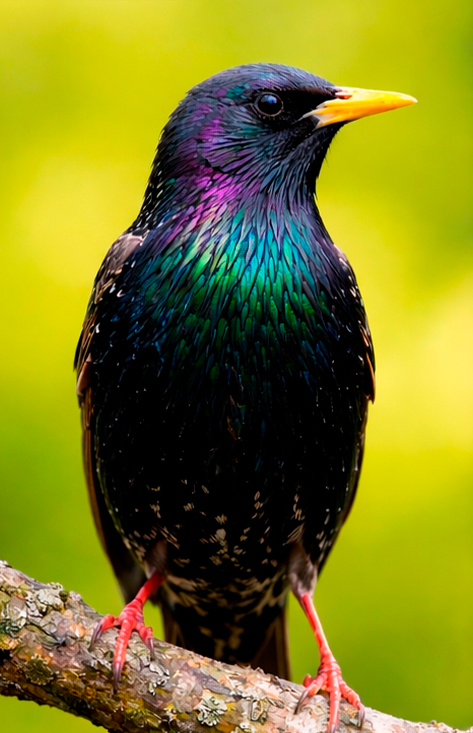
Summer
Glossy & Yellow Beak
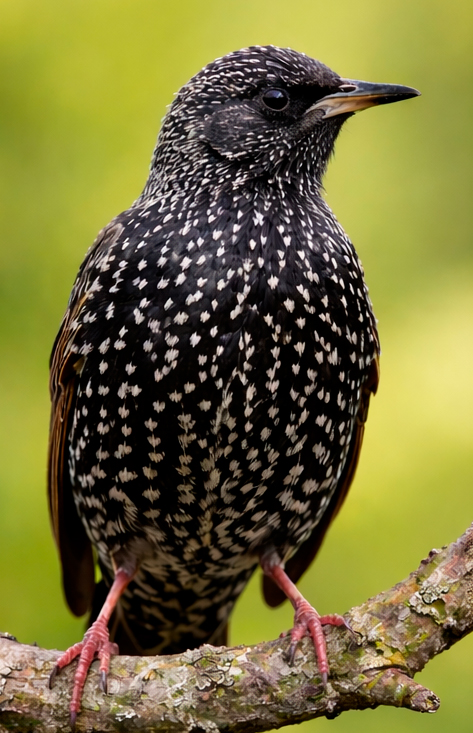
Winter
Speckled & Dark Beak
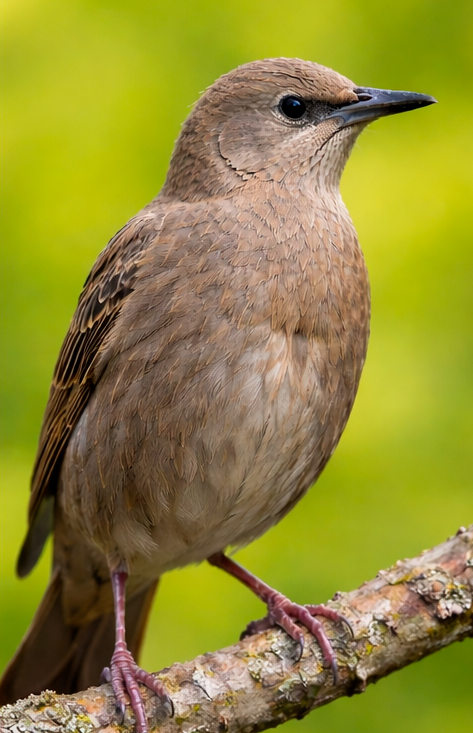
Juvenile
Brown & Plain
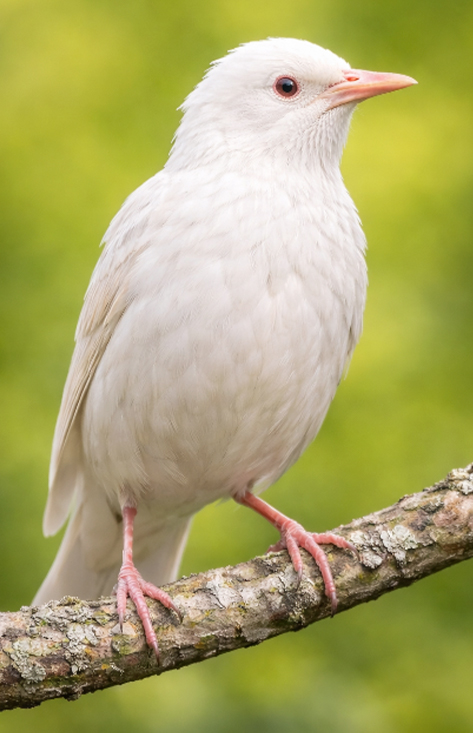
The “Ghost” Starling
Occasionally, a starling is born with Leucism or Albinism. This prevents pigments from coloring their feathers, resulting in a stark white bird.
3. A Complex Neighbor
Starlings are often misunderstood. Like many species, they have both positive and negative effects on our ecosystem.
⚠️ Challenges
- • Competition: They are aggressive nesters and often compete with native Bluebirds for tree cavities.
- • Agriculture: Large flocks can consume significant amounts of fruit crops and grain feed.
🌿 Benefits
- • Pest Control: They are voracious eaters of lawn pests, specifically Japanese Beetle larvae (grubs).
- • Intelligence: Starlings are highly intelligent, capable of mimicry and complex social behaviors.